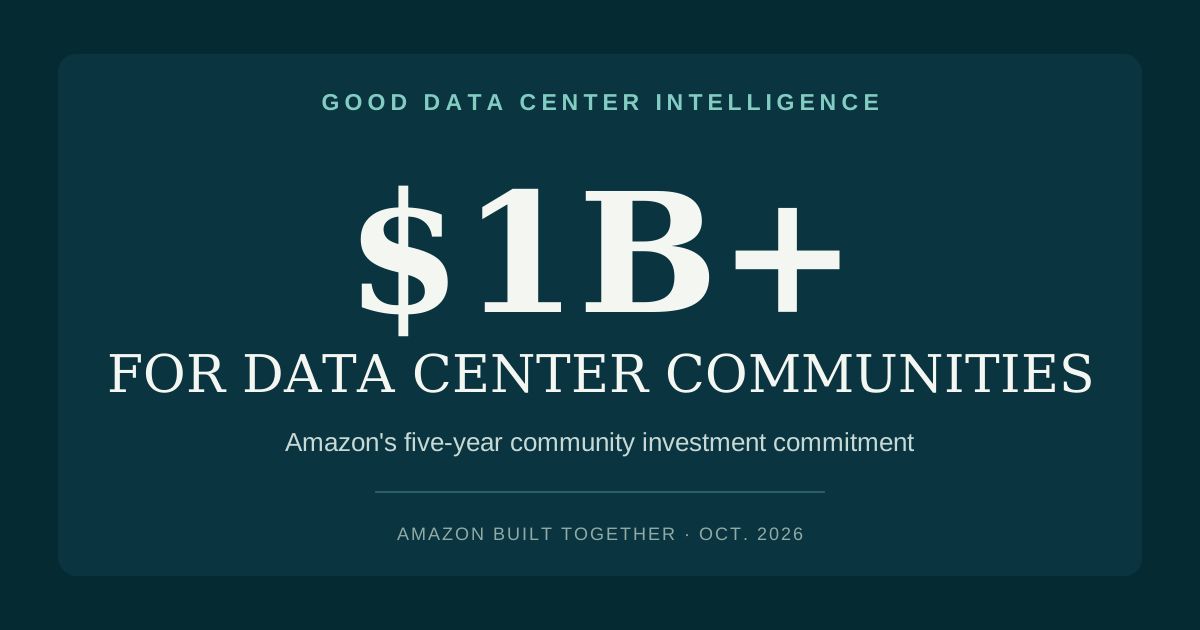
The headline is $1 billion. The structure is more interesting.
On October 2, Amazon announced Built Together, a new U.S. community-investment framework for places where it operates data centers. Amazon says the program will add more than $1 billion over five years to its existing community work.
The announcement lands at a moment when data center development is increasingly being judged on more than capital investment and tax revenue. Electricity costs, water, workforce, transparency, land use, public process, and local quality of life are now central project questions. Reuters and the Associated Press both framed Amazon's announcement against the backdrop of growing local opposition and moratorium activity.
Built Together is therefore not simply a philanthropy announcement. Amazon paired it with a new Data Center Commitment that codifies how the company says it will build and operate.
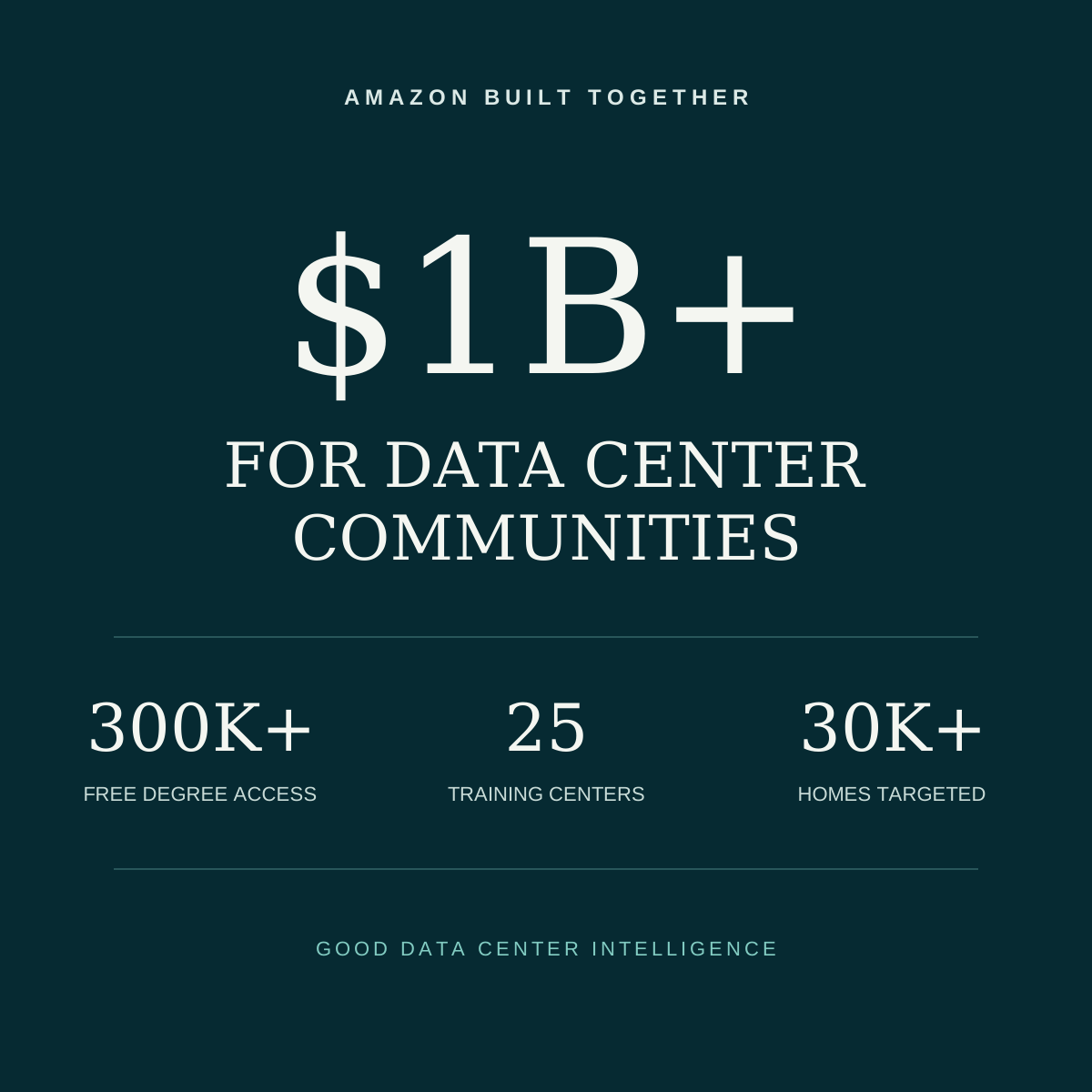
Built Together has three operating pillars
1. Education and workforce pathways
Amazon says it intends to connect more than 300,000 students in data center communities with free access to certificate or associate-degree programs over five years. The company describes the model as covering the remaining out-of-pocket cost after financial aid for programs in fields such as electrical trades, HVAC, fiber optics, IT, healthcare, education, public safety, and advanced manufacturing.
That breadth is notable. The program is not limited to direct Amazon jobs. It is designed around the wider labor market of a host community.
Amazon is also expanding a network of purpose-built Modular Training Centers located on or near data center sites. The company currently says three centers are operating, six are under development, and another 16 are planned, for a network of 25 centers. Each is designed to train roughly 2,000 to 4,000 learners per year in four- to 16-week skilled-trade programs using equipment such as electrical trainers and fiber-splicing tools, simulated data halls, mechanical galleries, and outside-plant training yards.
By the end of 2028, Amazon says the network is intended to prepare up to 100,000 learners annually for jobs with Amazon, construction partners, and other employers in the region.
2. Energy affordability and water solutions
Built Together also targets energy costs experienced by people and institutions around data center communities. Amazon says it will work with nonprofits, utilities, and state energy offices on efficiency upgrades for more than 30,000 homes and more than 300 schools and community buildings over five years.
Eligible upgrades can include HVAC systems, heat pumps, insulation, water heaters, batteries, and solar. Amazon says the upgrades are designed to reduce energy costs by an estimated 20% to 40%, while cautioning that actual bills will still depend on energy prices, weather, and household usage. In its announcement, Amazon estimated approximately $700 in annual household savings for participating homes.
Water is part of the broader commitment, but an important distinction is necessary. Amazon's headline Built Together funding is new. Its cited water-replenishment portfolio includes existing and contracted projects around the world. Amazon says it has contracted more than 65 water projects expected to return more than 8 billion gallons annually to local communities, more than twice the water it says its data centers used in 2025.
Those figures help describe Amazon's wider water strategy; they should not automatically be treated as $1 billion of new Built Together spending.
3. Flexible funding led by local priorities
The third pillar may be the most consequential for community-value negotiations.
Amazon says Built Together will provide millions of dollars per year in each data center community through local foundations and philanthropic partners. Residents and local organizations are expected to help direct spending toward priorities such as roads, parks, fire equipment, affordable housing, schools, food security, disaster preparedness, and community facilities.
The company says it will report outcomes transparently while local partners make allocation decisions.
That shifts the model away from a single standardized benefits package. A rural county, suburban jurisdiction, and fast-growing metro may all need different things.
The second announcement may matter even more
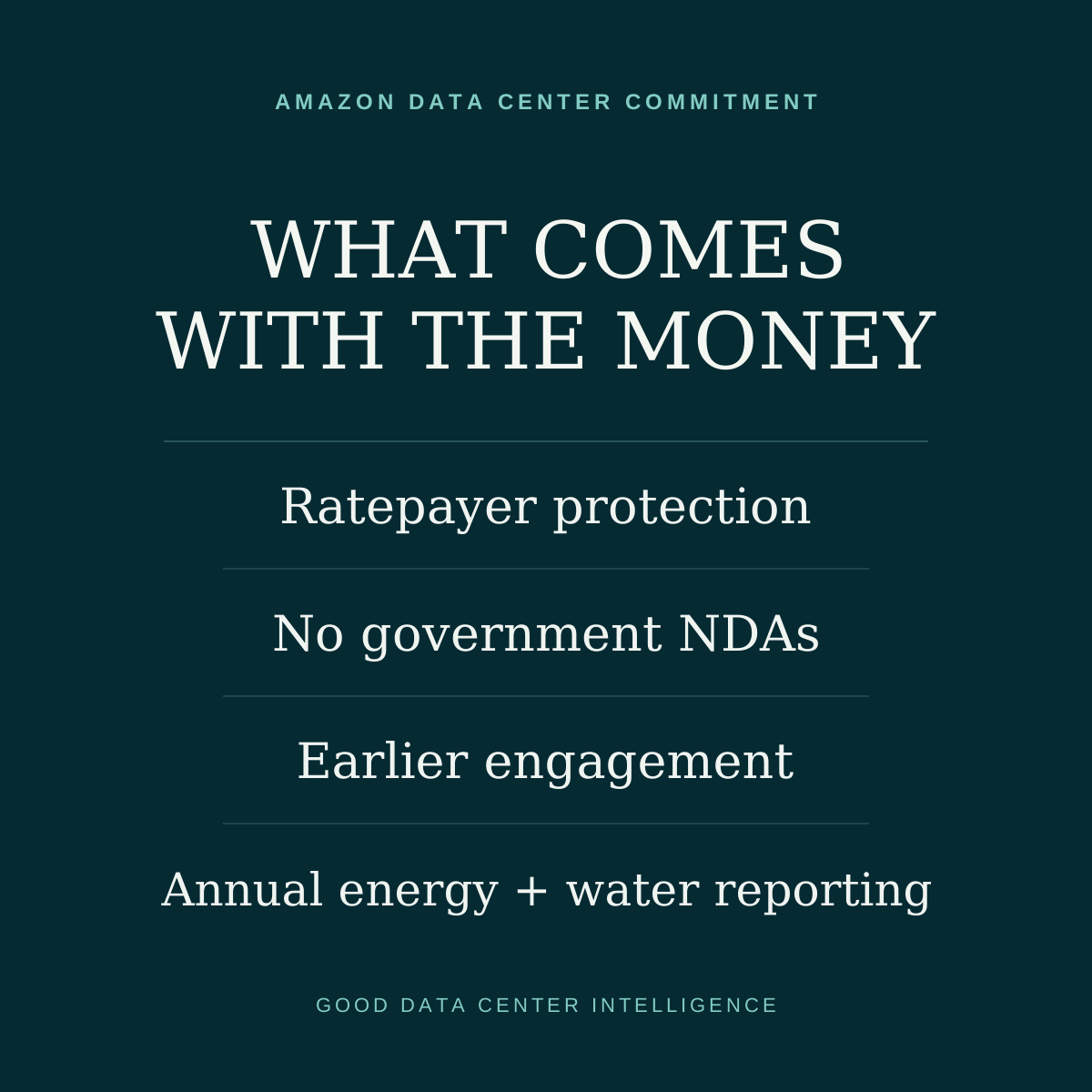
Alongside Built Together, Amazon published an Amazon Data Center Commitment organized around four themes: protecting and enhancing communities, providing jobs and economic benefit, engaging communities, and building and operating responsibly.
Several commitments are especially relevant to project development.
- Ratepayer protection: Amazon says the prices it pays for electricity should cover its energy needs and required infrastructure improvements, consistent with the federal Ratepayer Protection Pledge it signed earlier in 2026.
- No government-agency NDAs: Amazon says it no longer uses nondisclosure agreements with government agencies on data center projects.
- Earlier engagement: Amazon commits to open houses, earlier sharing of project information, and ongoing dialogue as projects advance.
- Resource and operating standards: Amazon cites a 2025 global PUE of 1.14, a goal to become water positive across data centers by 2030, local sound compliance, use of alternative water sources where possible, grid and water infrastructure investment, and Tier 4-equivalent backup generators at new sites.
- Annual disclosure: Amazon says it will publish energy use, energy efficiency, water use, water efficiency, and the percentage of energy from carbon-free resources annually.
The exact reporting granularity will matter. Community-level or project-level data creates a different accountability system than a national or global aggregate. Amazon's public commitment establishes the direction; implementation will show how decision-useful the reporting becomes.
Four buckets should stay separate
The strongest part of Amazon's architecture is that it implicitly separates issues that are often blended together in public debate. Good Data Center would make that separation explicit.
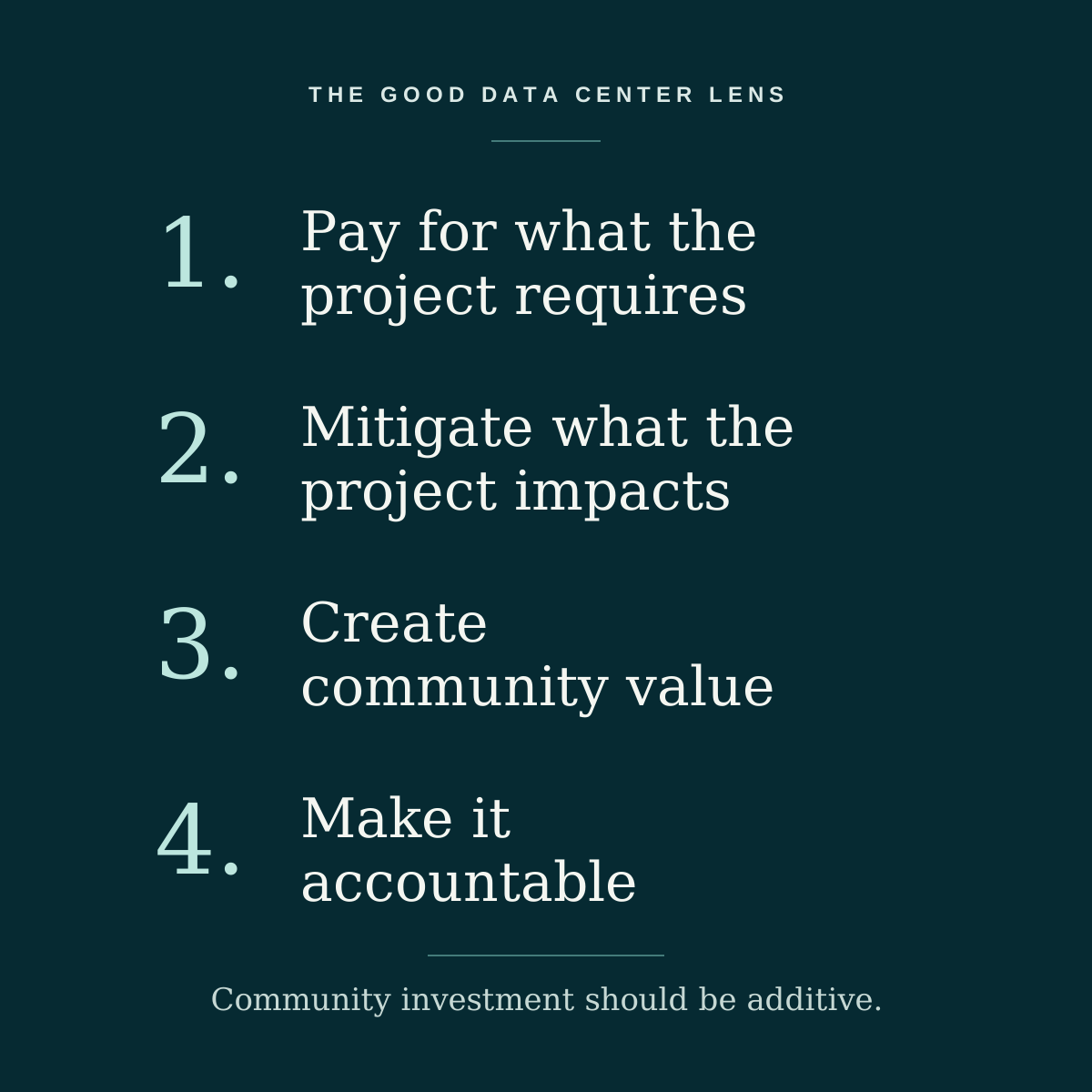
1. Cost responsibility
If a data center requires new generation, transmission, substations, or other utility infrastructure, paying those project-driven costs is not a community benefit. It is project cost responsibility.
2. Impact mitigation
Noise controls, water strategy, buffers, traffic improvements, emergency-response needs, and environmental protections address project impacts. They should not be counted twice as discretionary community generosity.
3. Shared community value
Free education, broader workforce pathways, home energy upgrades, parks, housing, schools, community facilities, and flexible local funding can create value beyond direct mitigation.
4. Accountability
Public reporting, clear ownership, transparent allocation, early engagement, and durable commitments determine whether the first three buckets can actually be trusted.
What is concrete now
Built Together is unusually specific for a national data center community program. Amazon has put public numbers against several outcomes: the five-year funding commitment, degree access, training-center scale, annual learner capacity, homes and public buildings targeted for upgrades, and the use of locally directed philanthropic partners.
The companion Data Center Commitment also codifies practices that have often been handled project by project, including ratepayer protection, no government-agency NDAs, annual resource reporting, and earlier public engagement.
Amazon also says it has contributed more than $1 billion during the past three years to U.S. communities where it has a meaningful data center presence. The company has not yet published a fully comparable bridge showing exactly how that historical figure maps to the categories and accounting rules of Built Together. The new commitment should therefore be evaluated on its own defined outcomes rather than by simply comparing annualized totals.
What still needs definition
The announcement is a framework, not a finished implementation manual. Several questions remain important:
- How will the $1 billion be allocated across individual communities, projects, and years?
- How does Amazon define the geographic boundary of a data center community?
- Which expenditures count toward the $1 billion and which sit outside it?
- How will local foundations and residents be selected to make funding decisions?
- What outcome metrics will be published, and at what geographic level?
- Will commitments scale with project size, utility demand, expansion, or cumulative regional presence?
- How will commitments survive ownership changes, project delays, or changes in buildout?
- Will annual energy and water reporting be site-specific enough for host utilities and communities to use?
None of those questions negate the announcement. They identify the next layer of maturity: moving from corporate commitment to project-level evidence and accountability.
This is becoming an industry pattern
Amazon is not acting in isolation.
Meta has launched its own $1 billion Future is for Everyone Fund for U.S. data center communities, organized around community enhancement, economic vitality, education, and sustainability.
Microsoft began 2026 with a Community-First AI Infrastructure framework built around paying its energy costs, water stewardship, local jobs, tax-base contribution, and community investment.
Google has increasingly paired data center development with targeted energy-affordability programs, including a $10 million Nevada Energy Impact Fund announced in September.
The models differ, but the direction is becoming clearer: the social and public-system dimensions of data center development are moving closer to the core development model.
Good Data Center view
The $1 billion number will get the attention. The more durable signal is that Amazon is trying to turn community value into a repeatable operating system.
The implementation test is straightforward: can a host community trace the project from need, to impact, to response, to commitment, to measured outcome? If yes, community value becomes part of project delivery. If not, even a large headline commitment can remain difficult to evaluate.
That matters because community investment alone cannot create project readiness. A project still needs credible answers on power, water, land, infrastructure costs, public process, operating impacts, and long-term accountability.
But a structured community-value framework can make those answers stronger when it does four things well: starts early, separates mitigation from added value, lets host communities define priorities, and creates a public record of delivery.
Amazon's model is not yet a universal standard, and implementation will vary by place. But it raises the baseline for what host communities can reasonably ask large data center operators to make visible.
Questions to carry into projects
- Which project costs belong to the developer before community benefits are discussed?
- Which local impacts require mitigation rather than philanthropy?
- What community priorities should shape flexible investment?
- How should community investment scale with MW, acreage, tax incentives, or cumulative regional buildout?
- What outcomes will be measured publicly each year?
- What data should be reported at the project or host-community level?
- Who controls community funds and how are conflicts handled?
- What commitments continue through expansion, sale, or operational change?
Amazon Built Together and Amazon Data Center Commitment
Amazon announced Built Together and its Data Center Commitment on Oct. 2, 2026. Program targets and company operating claims above are attributed to Amazon. Good Data Center's development implications and implementation questions are analysis.
Amazon Sustainability · Built Together
Amazon · Matt Garman announcement
Amazon · Data Center Commitment
Reuters · Amazon to invest $1 billion over five years in U.S. data center communities
Associated Press · Amazon community investment and transparency changes