
The development conversation is moving upstream
Data center development has traditionally been organized around a familiar set of fundamentals: land, power, fiber, capital, permitting, and speed to market. Those remain essential. But projects are increasingly being evaluated against a broader development record.
Who pays for the power infrastructure a project requires? How much water will it use? What measurable value reaches the host community? What information is available before approval? Who verifies commitments after a project moves forward? And what strategic purpose does the infrastructure ultimately serve?
Canada has now put those questions into a national framework.
On September 3, 2026, the Government of Canada and the Federation of Canadian Municipalities announced Canada's Responsible Data Centre Development Principles. The framework establishes five expectations for major data center projects and is supported by 23 signatories spanning AI, cloud computing, telecommunications, development, and data center operations.
Five principles define the baseline
The principles are simple enough to communicate clearly, but detailed enough to shape project decisions.
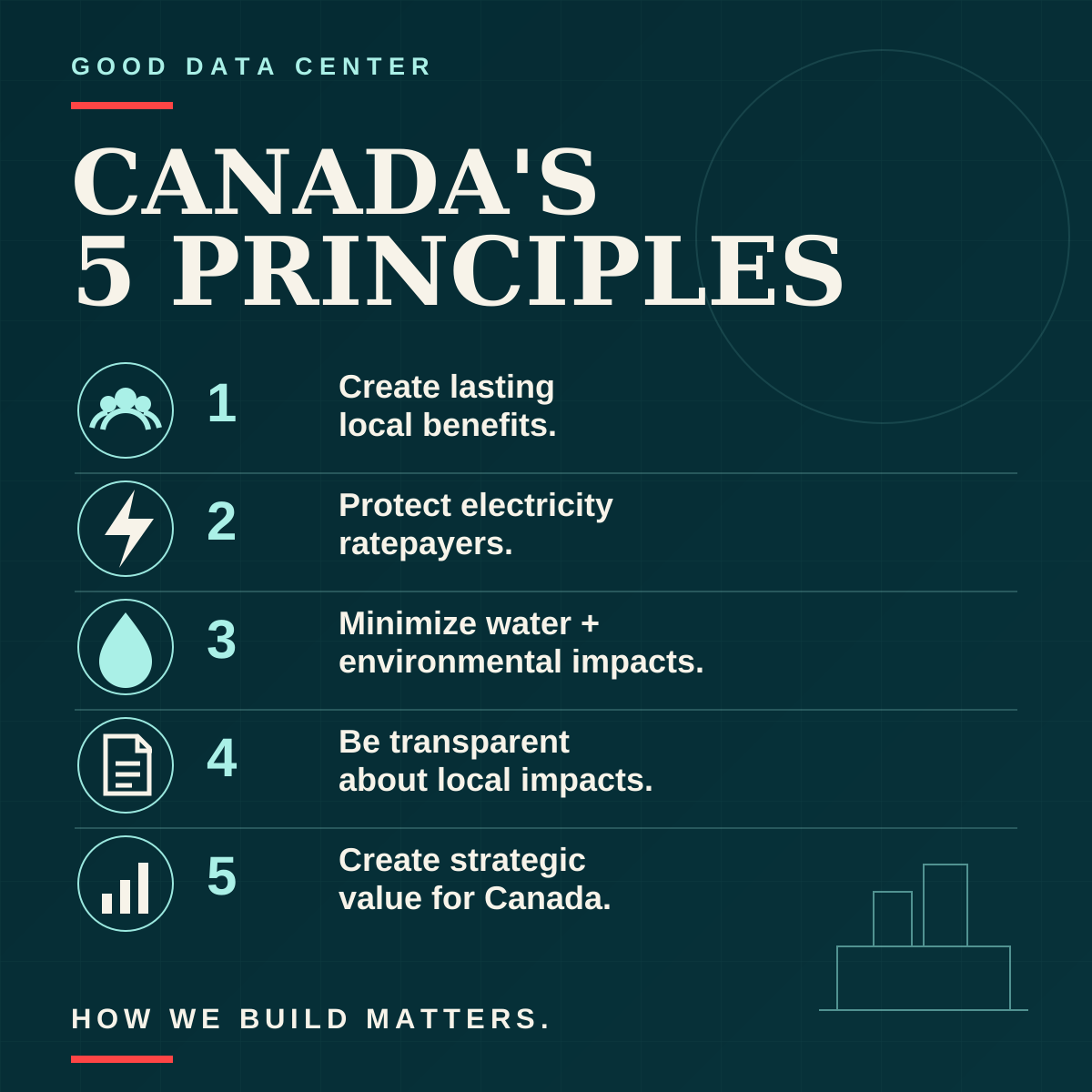
1. Create lasting local benefits
Canada's framework says data center investment should produce durable value for host communities and Indigenous rights holders. Examples include jobs, skills training and apprenticeships, local and Indigenous procurement, tax contributions, infrastructure investment, research partnerships, and access to compute for local businesses and institutions.
The important development mechanism is early engagement. The framework calls for proponents to work with communities and rights holders early enough to identify benefits that reflect local priorities rather than defining community value entirely from the project side.
2. Protect existing electricity ratepayers
The framework states that project-driven electricity system costs should not be shifted onto households and existing businesses. Proponents are expected to pay the costs of connecting and serving their projects, including generation, transmission, substations, and grid upgrades directly attributable to the development, proportionate to project scale and impact.
That is a consequential standard. A community may welcome a multibillion-dollar investment while still reasonably asking who will pay for the infrastructure required to serve it. Strong development answers that question before the cost allocation becomes a political problem.
3. Minimize water use and environmental impacts
Canada calls for freshwater conservation based on local conditions, resource constraints, and overall environmental performance. The framework points to high-efficiency or closed-loop water systems, waste heat recovery, and lower-emission energy sources as examples of approaches that may reduce project impacts.
The local qualifier matters. A gallon of water does not have the same significance in every market. Source reliability, drought exposure, competing uses, wastewater capacity, climate, and cooling technology can materially change the answer. Responsible development therefore requires a project-specific baseline rather than a generic industry average.
4. Be transparent about local impacts
This may be the most important principle from a project-development perspective.
The framework calls for early and transparent engagement with impacted local governments and Indigenous communities and for clear, project-appropriate, independently verifiable information on expected impacts, including power and water use, infrastructure requirements, sound, and emissions. It also calls for material commitments to be tracked over time using measurable and independently verifiable information while protecting legitimate security, privacy, and confidential commercial information.
That structure matters because transparency and confidentiality are often presented as opposites. They do not have to be. A project can protect legitimate proprietary information while still creating a decision-usable baseline for governments and communities.
5. Bring strategic value to Canada
Canada also places data centers inside a national strategic frame. Projects are expected to strengthen investment, tax revenue, domestic supply chains, innovation, research, workforce development, access to compute, digital resilience, and security.
This recognizes a reality that is becoming increasingly clear: data centers are no longer treated simply as a commercial real estate category. AI, cloud services, financial systems, health care, scientific research, government operations, and digital connectivity increasingly depend on compute infrastructure.
Countries want more of it. The development challenge is to capture that strategic value while producing strong local outcomes.
Industry participation makes the framework more significant
The signatory list is broad: Amazon Web Services, Anthropic, Beacon Data Centers, Bell Canada, BUZZ HPC, Cohere, Cologix, Denvr Dataworks, Equinix, eStruxture, Google, Hypertec Group, Meta, Micrologic, Microsoft, OpenAI, OVHcloud, Prologis, QScale, Sovereign Digital Infrastructure, TELUS, ThinkOn, and Urbacon Data Centre Solutions.

That breadth matters because the framework is not being advanced only as a government expectation. Major infrastructure buyers, developers, operators, AI companies, and cloud providers are publicly aligning around many of the same project-development themes.
The industry statements also reveal how those themes are becoming more concrete.
Google emphasizes paying for the power and infrastructure needs directly driven by its data center growth. Microsoft emphasizes whether communities are better off because infrastructure was built. OpenAI emphasizes early listening, paying attributable costs, protecting local resources, and ensuring host communities share in long-term economic value.
Meta provides one of the clearest project examples.
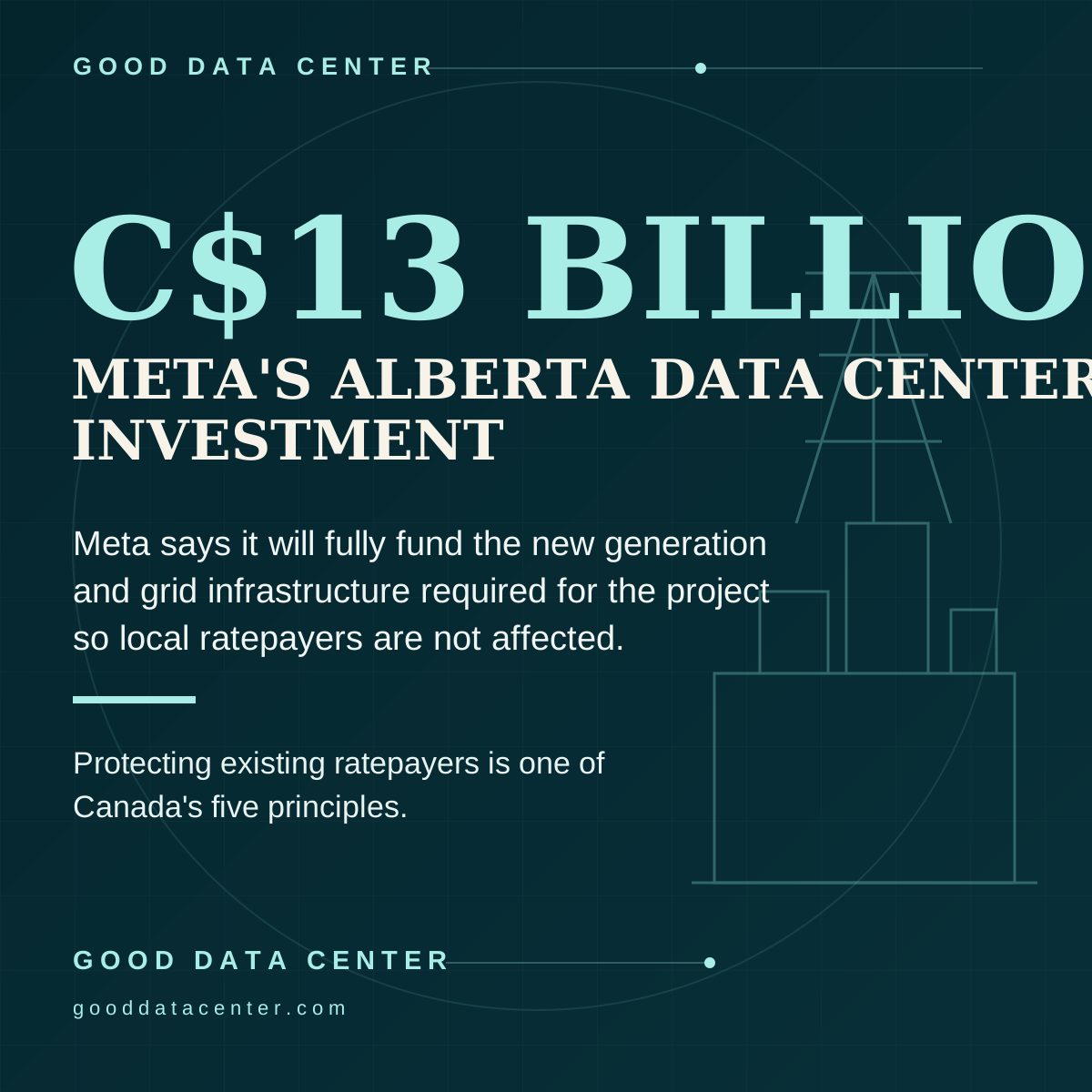
Meta says its Alberta project represents more than C$13 billion of investment and that the company will fully fund the new generation and grid infrastructure required for the project so local ratepayers are not affected. That is exactly the kind of translation from broad principle to specific project responsibility that will determine whether frameworks like this matter in practice.
From principles to project decisions
National principles are useful, but principles alone do not resolve a project.
The hard work begins when broad expectations have to become evidence, responsibilities, design changes, conditions, commitments, monitoring, and remedies.
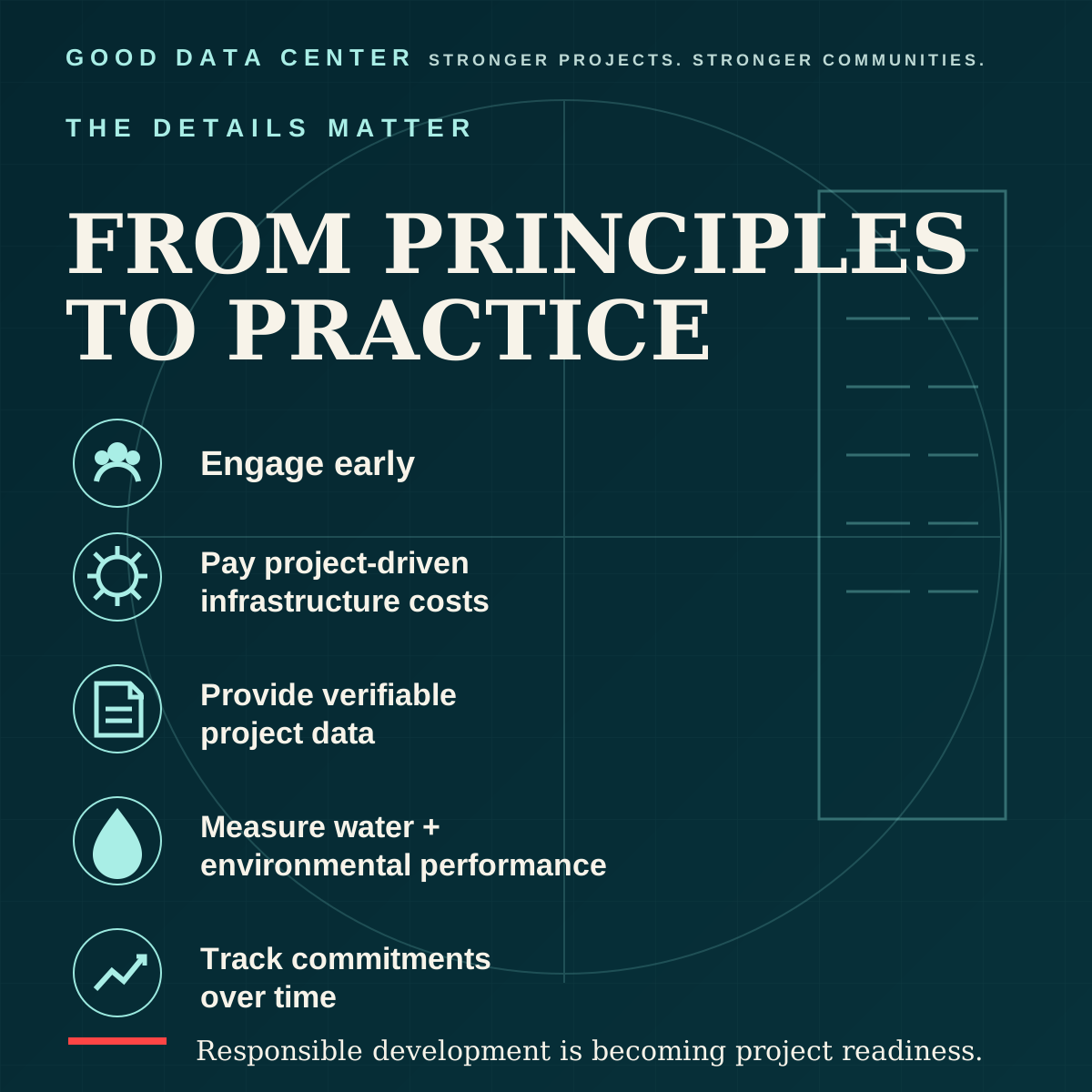
For a host community, “protect ratepayers” eventually has to become an answer to specific questions about upgrades, cost allocation, deposits, contractual obligations, generation, transmission, and load risk.
“Minimize water use” has to become a source, a demand profile, a cooling design, a drought scenario, a wastewater strategy, and a monitoring plan.
“Create lasting local benefits” has to become an agreed definition of value, a set of measurable commitments, responsible parties, timing, and verification.
“Be transparent” has to become an information-governance model that distinguishes what belongs in the public record, what can be reviewed by qualified parties, and what legitimately remains protected.
This implementation gap is where a large share of development risk lives.
Good Data Center view
Canada's framework reflects a broader market shift.
Community value, infrastructure responsibility, transparency, and accountability are becoming elements of project readiness.
That closely parallels the operating logic behind Good Data Center. Our framework begins with shared facts and moves through community value, concerns and impacts, practical solutions, commitments, public process, and long-term implementation accountability.
The objective is explicitly pro-development: help strong data center projects move forward by improving the process through which developers, utilities, governments, and communities understand and resolve material issues.
Clearer expectations can reduce uncertainty for developers. Better information can improve government decisions. Earlier issue identification creates more project optionality. Measurable commitments can build confidence that negotiated outcomes will survive approval and construction.
Responsible development should therefore be understood as a development capability, not simply an external constraint.
What better development looks like
- Establish the project fact base early. Power, water, infrastructure, sound, emissions, site conditions, public-system requirements, and expected community value should be visible before positions harden.
- Clarify infrastructure responsibility. Identify which upgrades are attributable to the project, who pays, who delivers them, and what happens if timing or load changes.
- Build host capacity. Communities evaluating their first major data center may need independent legal, technical, fiscal, utility, and public-process support.
- Translate concerns into project responses. Material issues should lead to redesign, capacity building, operating changes, mitigation, or measurable community-value commitments.
- Track commitments through the lifecycle. Approval should not be the end of the record. Construction, operations, expansion, ownership change, and decommissioning can all change project conditions.
Questions to carry into projects
- What benefits are expected to reach the host community, and how will they be measured?
- Which power and infrastructure costs are directly attributable to the project, and who is contractually responsible for them?
- What water source, cooling system, demand profile, drought performance, and monitoring plan support the project's water claims?
- Which local impacts require independently verifiable information before approval?
- How will material commitments be tracked, reported, and enforced over time?
- What strategic value does the project create beyond the site itself?
- Does the host government have enough capacity to evaluate the project at the same level of sophistication as the development team?
Innovation, Science and Economic Development Canada · Responsible Data Centre Development Principles
September 3, 2026. Supports the five principles, project expectations, signatory list, and company statements described in this analysis.
Read the official principles →
Government of Canada · News Release
Supports the announcement, national-policy context, Federation of Canadian Municipalities participation, and stated objective of creating a nationally recognized baseline that complements provincial, territorial, municipal, and Indigenous processes.
Read the Government of Canada release →
Evidence status: Official sources verified. Development implications, implementation analysis, and recommendations are Good Data Center analysis.