
What Digital Realty actually announced
Digital Realty announced a $20 million community investment tied to its planned Astra North data center development in De Soto. The company says it is working with the City of De Soto to finalize utility and property-tax credits of up to $1,000 per household annually for 10 years.
That wording matters. This is not yet a finalized $1,000 cash check program. The announced structure is a household credit mechanism, and Digital Realty says details are still being worked through with the city. At the stated maximum, however, a qualifying household could receive up to $10,000 over the decade.

The company also says it wants the benefit to begin in the near term, before the campus reaches full buildout and before the recurring tax and economic benefits of an operating campus are fully realized. That timing may be as important as the amount.
Why the structure is different
Large development projects usually make their local value case through some combination of jobs, construction spending, tax revenue, infrastructure improvements, charitable giving, workforce programs, or negotiated community-benefit funds.
Those can all be meaningful. But they often remain one step removed from a household's everyday finances.
The De Soto model is different in four ways.
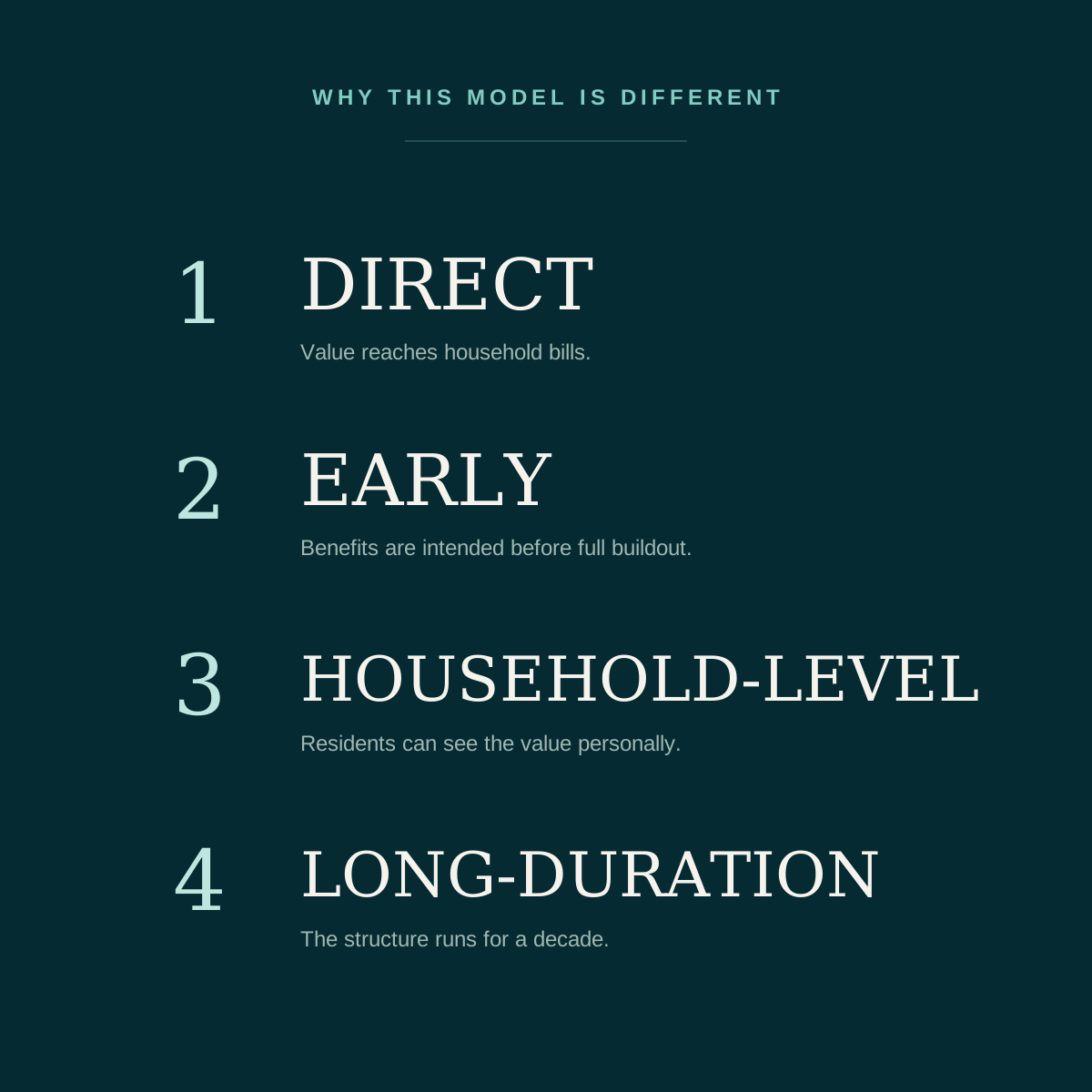
It is direct
The benefit is designed to reduce utility or property-tax obligations at the household level rather than flow only through general community programs.
It is early
Digital Realty says the credits are intended to accelerate value to residents before the project's recurring tax revenues and operating benefits fully arrive.
It is visible
A resident does not need to estimate the indirect value of a tax-base increase or infrastructure investment. A credit on a household bill is easier to see and understand.
It is long-duration
The announced structure runs for 10 years. That moves the concept away from a one-time launch grant and toward an ongoing relationship between project and place.
The project behind the $20 million
The community commitment is attached to a very large infrastructure project.
Digital Realty acquired approximately 1,440 acres at Astra Enterprise Park for about $475 million. The company has an energy-service agreement with the local utility for 600 MW of power by early 2028, with a path to 2 GW at full delivery.
The City of De Soto currently describes Astra North as an approximately 280-acre first phase with up to nine data center buildings totaling roughly 3 million square feet, more than 1,000 peak construction workers, and about 250 permanent positions. The project remains phased and continues through public review and engineering.
The De Soto Planning Commission approved the Phase One site plan on September 22, according to local reporting. Other fiscal and development approvals remain part of the broader process.
The site itself is also relevant. Astra Enterprise Park occupies the former Sunflower Army Ammunition Plant, a large industrial property that has spent decades moving through remediation and redevelopment. Digital Realty's project therefore sits inside an established industrial redevelopment strategy rather than a greenfield residential context.
Community benefit and project responsibility should remain separate
The strongest way to evaluate this $20 million commitment is not to ask whether the number is large enough in isolation.
It is to ask what category of responsibility it belongs to.
The City of De Soto says Digital Realty intends to fund the transmission, substation, and other electrical infrastructure required to serve the campus. The city also says the project is being designed around a large-load electric rate intended to protect existing residential and small-business customers from project-driven electric infrastructure costs.
On water, the current design anticipates outside-air cooling for roughly 85–90% of the year, with supplemental evaporative cooling during the hottest periods. The company is also exploring industrial wastewater treatment and reuse rather than sending cooling water into the city's sanitary sewer.
Those are project-responsibility questions. They should be evaluated on their own merits.
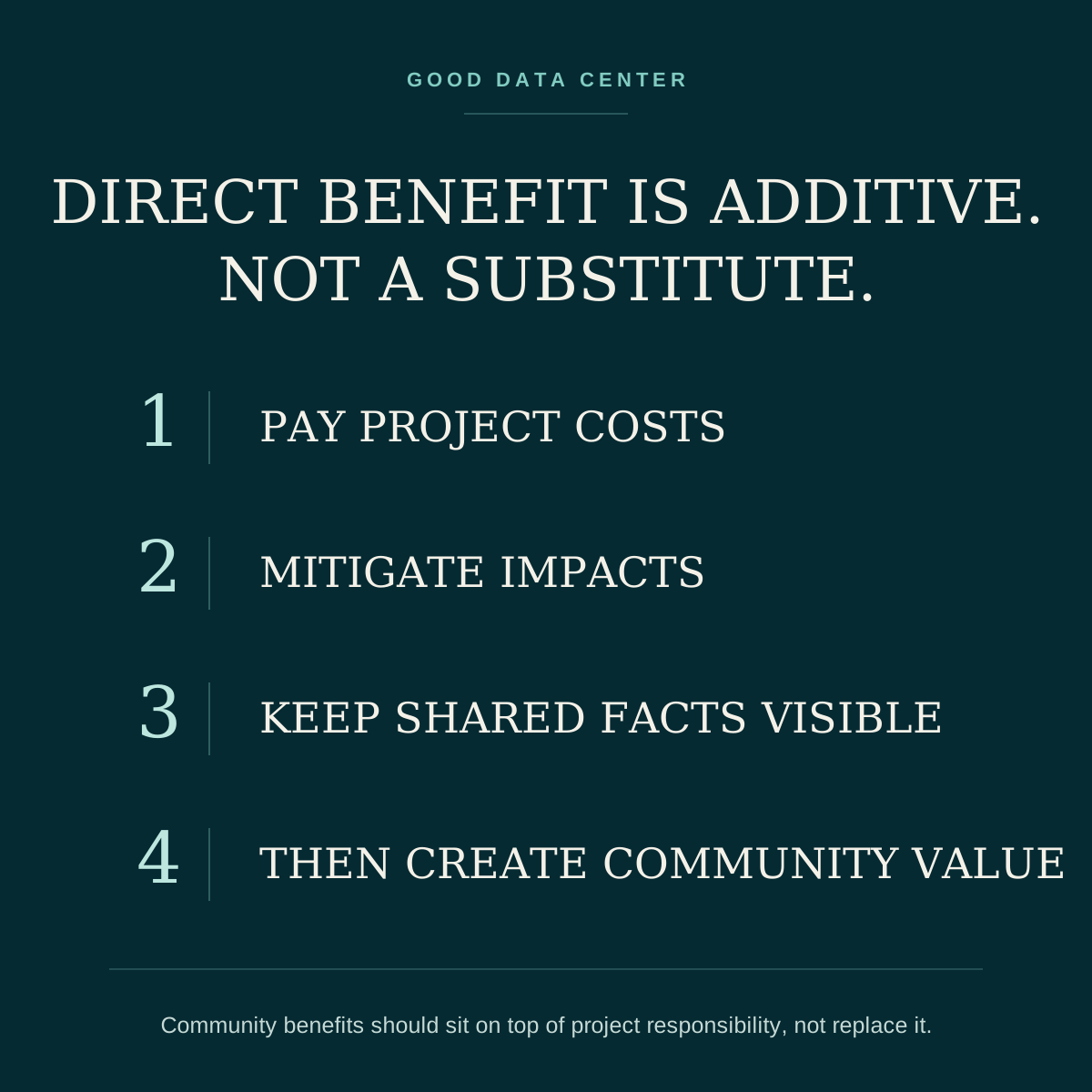
The household-credit program is different. If infrastructure costs and impacts are appropriately handled by the project, then a direct household benefit can sit on top as additional community value.
The skepticism is part of the case study too
Not every resident sees the announcement the same way.
Local reporting from KSHB found residents who welcomed the potential relief and others who remained skeptical, describing the offer as insufficient or questioning whether money could substitute for answers about long-term project impacts.
That reaction is useful rather than inconvenient. It demonstrates the limit of any benefits package.
A community investment can improve a project's value proposition. It cannot by itself resolve questions about power, water, noise, land use, incentives, transparency, or trust.
The De Soto case therefore illustrates two ideas at the same time: make benefits tangible and do not confuse tangible benefits with permission to leave other questions unanswered.
The fiscal picture should be evaluated as one system
KSHB reports that a public hearing on a proposed tax-increment-financing district is expected in November. That creates another important analytical question.
Community investment, public incentives, taxes and fees, developer-funded infrastructure, and long-term public costs should not be discussed as isolated numbers. They belong in one fiscal and community-value picture.
That does not mean an incentive automatically cancels out a community benefit, or vice versa. It means the decision record should make the flows visible:
- What public incentives are being requested?
- What infrastructure costs are paid by the developer?
- What taxes, franchise fees, or other revenues are expected?
- What direct resident benefits are committed?
- What public-service costs or risks remain?
- What happens if the project is delayed, downsized, expanded, or sold?
A good host-community value case should be understandable on a net basis, not only through the most attractive number on either side.
Community value is starting to take different forms
The De Soto announcement is especially interesting when viewed beside other recent developments.
Amazon has announced more than $1 billion over five years across U.S. data center communities through a portfolio-wide program. New York has proposed a voluntary starting benchmark of $1 million in community investment per megawatt of data center utility demand. Digital Realty's De Soto model puts a defined benefit directly against household utility and property-tax costs.
These are not equivalent structures and should not be compared as if they were simple price tags. But together they show an emerging market pattern: community value is becoming more explicit, measurable, and integrated into project development.
The next generation of project models may increasingly combine several approaches: project-specific cost responsibility, locally negotiated benefits, direct household relief, workforce pathways, public-system investment, and lifecycle reporting.
The mechanics now matter
The $20 million announcement is clear enough to establish a direction. The implementation details will determine how meaningful and durable the benefit becomes.
Several questions are still open:
- Who qualifies as a De Soto household?
- Will credits be automatic or require enrollment?
- How will renters participate if they do not receive a property-tax bill directly?
- How will utility and property-tax credits be allocated between households?
- What happens when a household's eligible bill is below $1,000?
- When does the 10-year clock begin?
- How are new households treated as the city grows?
- Is the full $20 million placed in a dedicated vehicle or funded annually?
- What happens if the campus is delayed, downsized, sold, or never reaches full buildout?
- Will the city and Digital Realty publish annual participation and disbursement data?
These are not objections to the model. They are the details that turn a compelling announcement into an accountable commitment.
A useful new concept: time-to-benefit
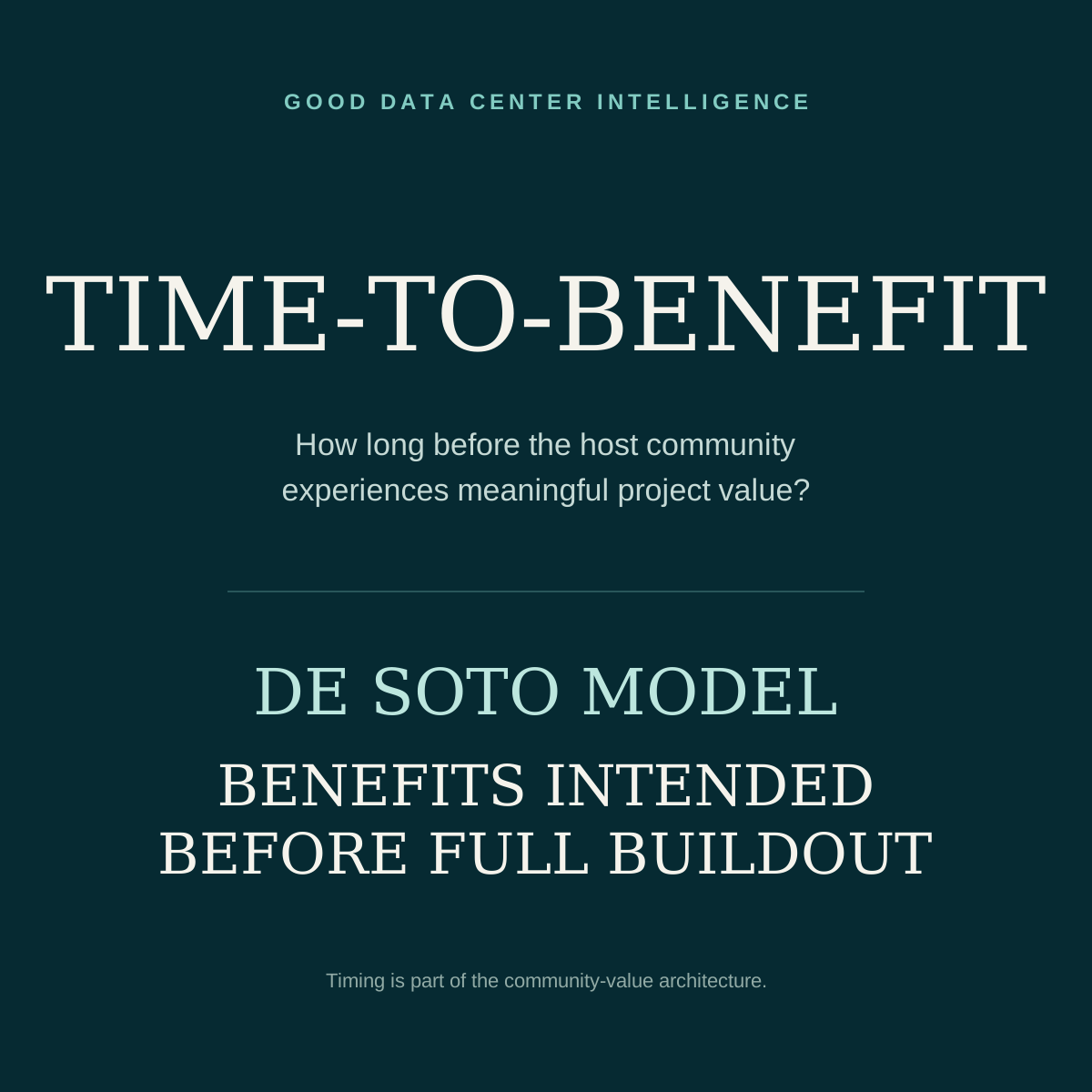
One of the most interesting parts of Digital Realty's announcement is its emphasis on delivering value before the campus is fully operational.
That suggests a useful project-development question: how long does a host community have to wait before it experiences meaningful benefits?
Some benefits naturally arrive later. Permanent tax revenue requires an operating asset. Long-term jobs require completed facilities. Infrastructure may take years to construct.
But a development process can still identify benefits that arrive earlier: training programs, local procurement, road improvements, community funds, public facilities, or—in De Soto's case—household relief.
Thinking about time-to-benefit can improve the sequencing of community value rather than leaving nearly all of it at the end of a multiyear buildout.
Good Data Center view
Digital Realty's De Soto commitment is interesting because it makes community value unusually concrete.
Up to $1,000 per household per year is understandable. Ten years is understandable. Utility and property-tax relief connects directly to costs people experience.
That is a useful evolution in community-benefit design.
But the strongest version of this model is not “here is money, therefore the project is good.” The stronger model is:
- the project pays the costs it creates;
- material impacts are identified and mitigated;
- decision-relevant facts remain visible;
- public incentives and public value are evaluated together;
- additional community value is tangible; and
- the commitments can be tracked over time.
The implementation test is simple: Can a resident understand both what the project asks of the community and what the community receives in return?
If the answer is yes, the community-value case becomes much stronger.
Questions to carry into projects
- What benefits reach residents directly versus indirectly?
- How early in the development timeline does meaningful community value begin?
- Are infrastructure responsibility and community benefits clearly separated?
- How are renters, homeowners, businesses, and vulnerable households treated differently?
- How does a benefit scale if the project expands?
- How should benefits interact with requested tax incentives or other public support?
- What happens if construction or energization is delayed?
- What public reporting proves the commitment was delivered?
Digital Realty · De Soto household commitment and Astra North project
Digital Realty announced the $20 million household community investment on Oct. 9, 2026. The benefit mechanics remain under development with the City of De Soto. Project-development implications, comparisons, and implementation questions in this article are Good Data Center analysis.
Digital Realty · News Release, Oct. 9, 2026: “Digital Realty Commits $20 Million Toward Utility and Property Tax Credits to De Soto Residents.”
Digital Realty · De Soto data center project
Digital Realty · Astra Enterprise Park acquisition and power agreement