The scale changed the planning problem
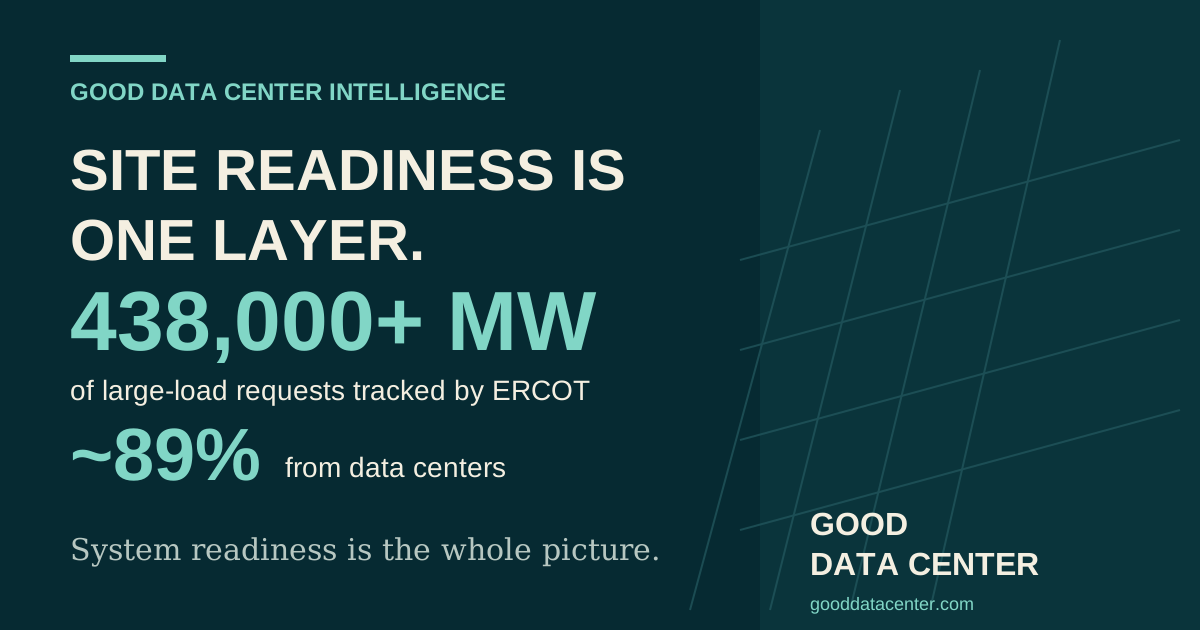
ERCOT is tracking more than 438,000 megawatts of large-load connection requests. Nearly 89 percent of that requested load comes from data centers.
At that scale, the old project-by-project study model became slow and repetitive. Texas responded by approving Batch Zero, a new process that groups qualifying large loads of 75 megawatts or more into one study.
The point is to see the whole picture at once: aggregate demand, available grid capacity, reliability effects, and the transmission upgrades required to serve growth.
A parcel can be ready while the surrounding system still needs work
A site can have land control, zoning, a development plan, and a willing buyer. That says very little about whether the surrounding infrastructure can absorb the project on the same timeline.
Power is the clearest example. A large data center becomes part of a generation, transmission, reliability, and cost-allocation system the moment it seeks service.
The same logic carries into water, roads, workforce, public safety, housing, emergency planning, and community process.
The project may occupy one parcel. Its requirements move through the whole system.
Batch Zero is a planning response to cumulative demand
ERCOT says Batch Zero is the first batch process used by a U.S. grid operator to assess large electricity users seeking connection. Rather than examining every project as if it were the only major new load in the queue, the process studies qualifying projects together.
That matters because cumulative demand can change the answer to almost every project question.
A transmission line that works for one project may become constrained when several projects arrive.
A generation plan that looks sufficient for a single load can look different when hundreds of gigawatts are seeking service.
A community that appears ready for one major industrial project may need a different infrastructure strategy when several are proposed in the same region.
Good Data Center view
This is bigger than an ERCOT process change.
It is a useful model for how data center development should be evaluated more broadly.
Start with the site, then widen the frame.
What does the project need from the grid? What new infrastructure is required? Who pays for it? What happens if the load arrives slower than forecast? What happens if several projects arrive faster?
Then carry the same discipline into water, transportation, workforce, public systems, land, and community capacity.
Strong projects make those system questions visible early, while design, timing, phasing, infrastructure responsibility, and mitigation options are still available.
Questions to carry into other projects
- What cumulative demand already exists in the market around this project?
- Which infrastructure systems become constrained when several projects advance at once?
- Which upgrades are required specifically because of the project?
- Who carries the cost and performance responsibility for those upgrades?
- What changes if project load, timing, or phasing shifts?
- Which decisions should be coordinated across utilities, governments, developers, and communities before commitments harden?
- What evidence shows the surrounding system is ready for the project at the proposed scale?
ERCOT / Public Utility Commission of Texas · Batch Zero
June 18, 2026. Supports the approval of Batch Zero, the 75 MW qualification threshold, the system-wide batch study approach, more than 438,000 MW of tracked large-load requests, and the statement that nearly 89 percent are data centers.
Evidence status: Official source verified. Development implications and recommendations are Good Data Center analysis.